

If you're packing for the pool, beach, splash pad, or swim lessons, you've probably looked at the cloth diapers already in your drawer and wondered: do I really need a separate swim diaper, or can I just use what I have?
It's a fair question, and the short answer is yes, you really should have a dedicated swim diaper. Regular cloth diapers and washable swim diapers are similar, but they're not interchangeable. Here's the key difference: a swim diaper is designed to catch poop while letting water and pee pass right through the diaper shell. This fabric feature allows liquids to flow through instead of getting trapped inside a traditional waterproof diaper shell, making for easy cleanup and you avoid the dreaded gush of poopy water down your baby's legs when you take the diaper off after the pool. A regular cloth diaper does the opposite: it's built to trap and hold liquid, which is exactly what you don't want in the water.
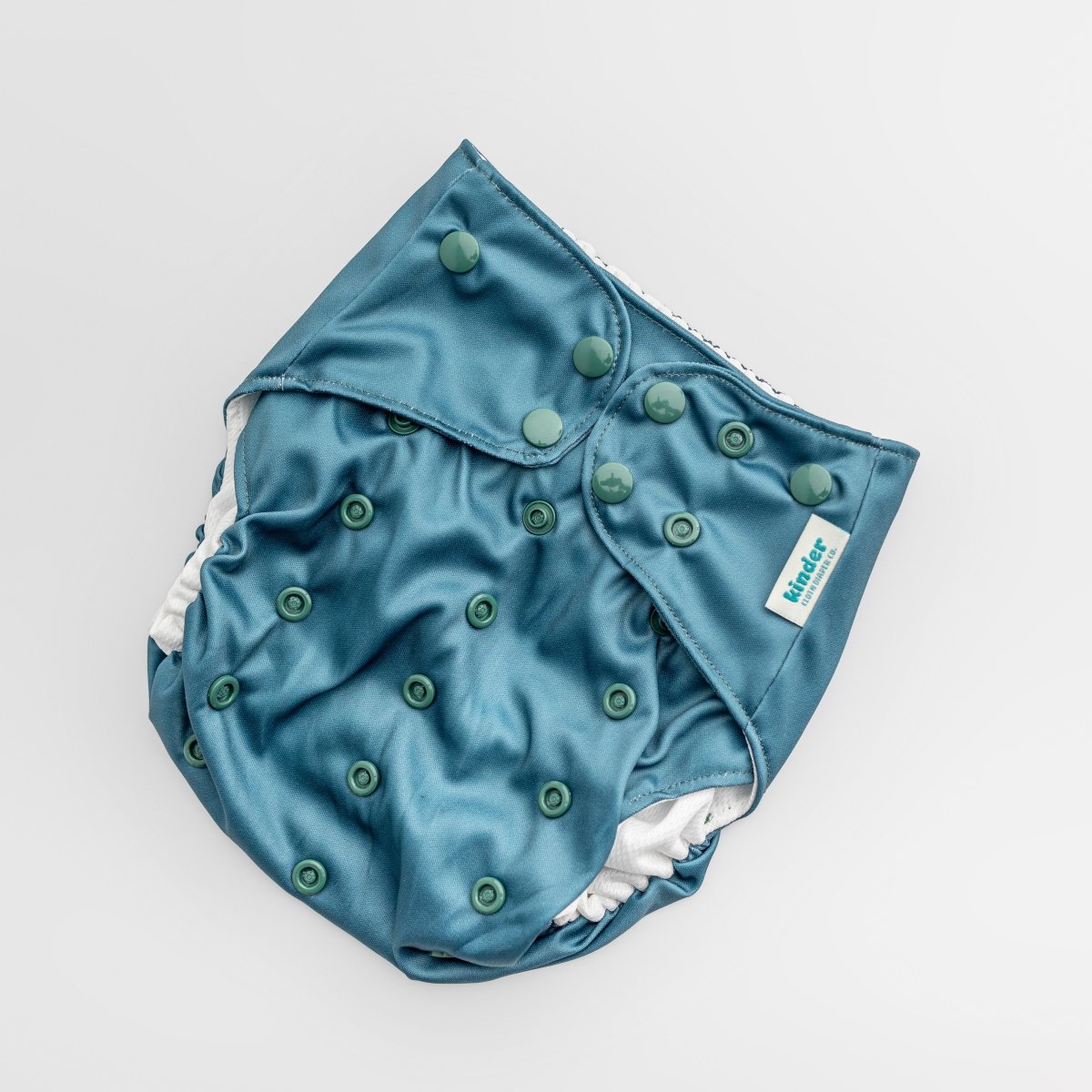
Shop Kinder Swim Diapers
Stop spending money on a single swim day.
Kinder's reusable swim diaper is made with Athletic Wicking Jersey (AWJ), a buttery-soft, stretchy fabric that dries fast, lets liquid pass through freely, and traps solids inside.
Shop NowLet's break down why a swim diaper is the right tool, and why a regular cloth diaper isn't.

What a Swim Diaper Actually Does
A swim diaper has one main job: contain solid waste while your baby or toddler is in the water. It is not designed to absorb pee, and that's by design.
The fabric shell of a swim diaper allows water and urine to pass through rather than soaking it up. This keeps the diaper lightweight and snug so your little one can move, splash, and play freely. Just as importantly, because the diaper isn't holding onto a lot of water, there's no sagging reservoir to spill out during a diaper change. You get a cleaner, easier change and no surprise gush of poopy pool water.
The CDC notes that swim diapers are not leak-proof and don't keep all germs out of the water, which is exactly why fit and frequent changes matter so much (more on that below).
Why a Regular Cloth Diaper Is not Recommended in Water
A regular cloth diaper is engineered to do two things at once: soak up liquid, and the waterproof cover (PUL) traps it inside to keep your baby clean and dry. That's exactly what you want on land. In the pool, it works against you.
Within minutes, a regular cloth diaper will:
- Soak up pool water until the inserts are saturated and heavy.
- Sag heavily between your baby's legs, weighed down by all that trapped water, limiting movement
- Become bulky and uncomfortable as the waterproof cover holds the water in instead of letting it drain
- Hold a heavy load of contaminated water that gushes out the moment you peel off the cover
None of that helps contain poop, which is the purpose of a diaper in the water. Instead, you end up with a soggy, sagging diaper that's harder to manage and creates a bigger mess at change time. (Nightmare fuel.)
What about using a PUL pocket diaper without an insert?
In a pinch, it can work, the empty pocket shell won't have an absorbent insert to soak up and swell with pool water, so it stays lighter than a fully stuffed diaper. But it's not recommended. The waterproof PUL cover still isn't designed to let water pass through the way a swim diaper is, so it can trap water and give you that gush of poopy pool water during diaper changes.

Do Swim Diapers Absorb Urine?
No, swim diapers do not absorb urine. They're made for water use, so liquid passes through instead of soaking in. This is true for both reusable and disposable swim diapers.
This surprises a lot of parents, because every other diaper they've used is built to absorb. But for swimming, absorbing pee would defeat the purpose.
The CDC notes that swim diapers don't stop pee, poop, or germs from getting into the water, so families should still take bathroom breaks and check diapers regularly during water play.
Are Swim Diapers Necessary?
Yes, swim diapers are usually necessary for babies and toddlers who aren't fully potty trained. Many pools, swim schools, and water parks require them because they help reduce the chance of solid waste entering the water.
Swim diapers aren't a perfect barrier, but they're an important part of pool hygiene. And if your child has diarrhea, skip swimming altogether. The CDC advises staying out of the water when diarrhea is present, because germs spread easily in recreational water and can make others sick. No swim diaper can contain that.

Should Swim Diapers Be Waterproof?
No, swim diapers should not be fully waterproof. A completely waterproof diaper would trap water inside making for a messy and unpredictable diaper change.
A good swim diaper should fit snugly around the waist and legs, but it shouldn't act like a sealed plastic bag. The goal is to contain solid waste while letting water move freely through the diaper.
This is why fit is everything. Too loose, and it won't contain messes well. Too tight, and it can dig into your baby's skin and limit comfortable movement.
Reusable vs. Disposable Swim Diapers
Both reusable and disposable swim diapers share the same job: contain poop during water play. Neither one absorbs urine, and both let water pass through. The difference is what happens after swim time.
Reusable swim diapers are washable, adjustable, and built for repeat use. They're a great fit if your family swims more than once or twice a season, and they're easy to toss in a swim bag for pools, splash pads, beach days, and swim lessons. For families who swim often, they're more budget-friendly and create less waste.
Disposable swim diapers are convenient for travel or the occasional swim day, but you'll need a fresh one every time, and they still don't absorb pee.
How to Wash Reusable Swim Diapers
Reusable swim diapers are simple to clean. Always check the care label on your specific diaper first, then follow these general steps.
If the Swim Diaper Is Only Wet
Rinse the diaper with cool water after swimming to remove pool chemicals, salt, sand, or sunscreen residue. Then wash it with your regular diaper laundry or a small load of baby items. Hang dry or tumble dry low if the care label allows, and skip fabric softener since it leaves buildup on the fabric.
If There Is Poop in the Swim Diaper
Remove as much solid waste as possible into the toilet ands store in a sealed wet bag until you are back at home. Rinse the diaper carefully in the laundry sink, toilet or other wash basin. Wash with detergent on a warm cycle and make sure it's fully clean before the next use.
FAQ: Swim Diapers
Can my baby wear a regular cloth diaper in the pool?
Yes, however it is not recommended. A regular cloth diaper is made to absorb and hold liquid, so it will become heavy, sag, and generally be uncomfortable in the water, and it won't contain poop the way a swim diaper does.
Do swim diapers hold urine?
No. Swim diapers don't hold urine. They're designed to let water and pee pass through while containing solid waste.
Are swim diapers required at pools?
Many public pools, swim schools, and water parks require swim diapers for babies and toddlers who aren't potty trained. Always check the rules before you go.
Are reusable swim diapers sanitary?
Yes, reusable swim diapers are sanitary when used correctly, changed promptly, and washed well after each use.
How many reusable swim diapers do I need?
For a short outing, one may be enough. For longer days, swim lessons, vacations, or multiple kids, having two or more makes changes easier.

